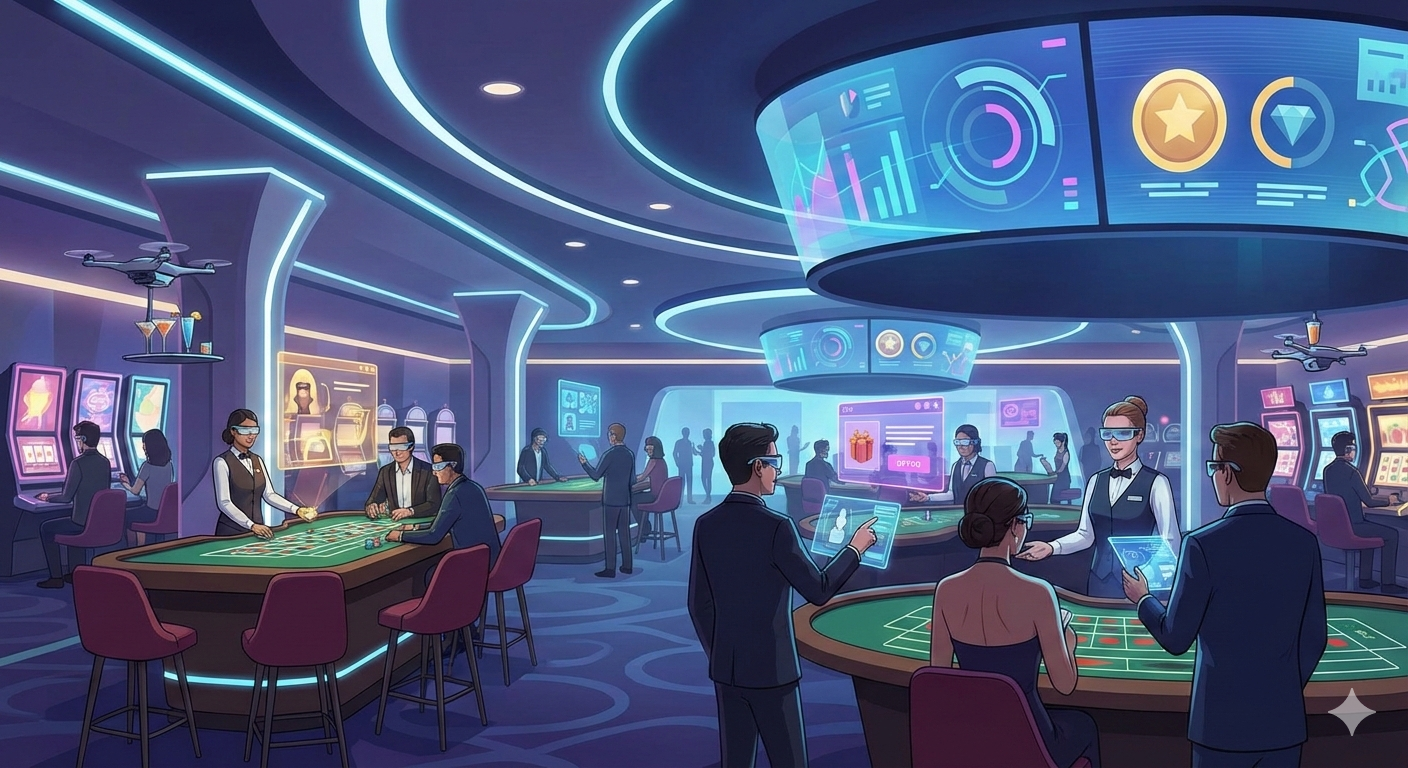
I have spent the last decade watching the gambling industry transform from a world of flashing neon lights and loud carpets to a sophisticated, data-driven digital ecosystem. As we move into 2026, it is clear that the game has changed entirely. The tools I once considered “cutting edge” only a few years ago now look like relics of a distant past. Today, casino marketing is not just about attracting players, it is about creating a seamless, hyper-personalized, and safe environment where the user experience is the ultimate product.
In my experience, the shift toward Artificial Intelligence (AI) and Augmented Reality (AR) has been the most significant driver of this change. We are no longer in an era where a one-size-fits-all email blast can keep a player engaged. Now, we are looking at real-time decision engines that know exactly what a player wants before they even realize it themselves. Whether it is a specialized bonus for a resident in Warsaw or a live-streamed slot tournament for a player in Nevada, the strategy is the same: relevance is everything.
The Era of Hyper-Personalization and AI Agents
The most dramatic shift I have witnessed in 2026 is the rise of the AI marketing agent. These are not the clunky chatbots we used to struggle with. They are sophisticated, context-aware assistants that manage the entire player lifecycle. I have seen platforms where AI agents analyze millions of data points, from a player’s preferred game speed to their typical session time, to deliver tailored offers in seconds.
This level of personalization has fundamentally changed how we approach bonuses. In the past, every new sign-up might get the same fifty free spins. Today, my strategy involves using predictive modeling to determine if a player prefers high-volatility slots or low-stakes table games. By matching the reward to the psychological profile of the user, we see retention rates that were previously thought impossible.
Integrating regional offers has also become much more efficient. For example, if I am targeting the Central European market, I focus on localized incentives like the no deposit bonus Poland that resonate with the specific gaming culture and regulatory environment of that country. These targeted approaches ensure that the marketing spend is utilized on players who are truly interested in the specific value proposition being offered.
Immersive Tech: Moving Beyond the Screen
If 2024 and 2025 were the years of experimentation with Virtual Reality (VR), then 2026 is the year it became a standard marketing channel. I have watched “digital twins” of famous land-based casinos become the go-to destination for high rollers who prefer to play from the comfort of their homes. It is no longer about looking at a 2D interface on a smartphone. With the latest headsets and improved 5G latency, players are literally walking through virtual casino floors, interacting with other avatars, and sitting at tables with live dealers.
Augmented Reality has also bridged the gap between physical and digital spaces. I often tell my clients that the best marketing is the kind that doesn’t feel like marketing. AR overlays allow casinos to send “hidden” bonuses that players can only find by using their phone cameras at specific locations or during certain live events. This gamification of the physical world has turned the entire city into a potential casino lobby, keeping the brand top-of-mind throughout the day.
The Shift in Bonus Structures and Player Incentives
The way we think about bonuses in 2026 has evolved from simple “carrot-on-a-stick” tactics to complex value-exchange systems. Players have become more savvy, and they demand transparency. To stay competitive, I have had to rethink the traditional wagering requirement model.
Below is a comparison of how marketing tactics have shifted over the last few years:
Marketing Evolution: 2020 vs. 2026
| Feature | 2020 Marketing Tactic | 2026 Marketing Tactic |
| Bonus Type | Generic “Deposit 100, Get 100” | Behavior-based rewards and real-time perks |
| Communication | SMS and Weekly Emails | AI-driven push notifications and AR overlays |
| Loyalty Program | Point-based tiers (Bronze, Silver, Gold) | Tokenized, cross-platform assets and NFTs |
| Customer Support | Humans or basic scripts | 24/7 Hyper-realistic AI avatars |
| Personalization | Based on “last played” game | Based on real-time emotional and behavioral data |
| Player Safety | Manual reviews and static popups | AI-powered predictive intervention tools |
Responsible Gaming as a Competitive Advantage
One of the biggest surprises for some of my colleagues has been how “responsible gaming” became a major marketing tool. In the past, compliance was often seen as a hurdle. In 2026, it is a badge of honor. I have found that players are much more likely to trust and stay with a brand that proactively protects them.
Modern platforms now use “Responsible UX” designs. Instead of just showing a player how close they are to a VIP level, my designs now include progress bars for their self-imposed spending limits. We reward players for setting these limits. For example, a player might receive a “Smart Player” badge and a small bonus for maintaining a healthy play-to-break ratio for thirty days. By aligning the casino’s goals with the player’s well-being, we build long-term loyalty rather than short-term profit.
Social Gaming and the Streamer Economy
The social aspect of gambling has reached its peak in 2026. I am no longer just marketing to individuals, I am marketing to communities. Features like “Bet with Streamers” have revolutionized player acquisition. When a popular creator is playing a live-dealer game, thousands of their fans can place the same bets and chat in real-time.
This collective experience creates a sense of belonging that traditional online casinos lacked. My marketing campaigns now often focus on “Community Quests” where a whole group of players must reach a certain goal to unlock a shared prize pool. This peer-to-peer interaction reduces the isolation of online gambling and makes the experience feel more like a modern video game.
Key Pillars of a 2026 Marketing Strategy
To be successful in this environment, I always focus on these core pillars:
- Zero-Latency Interactions: With 5G being the standard, any delay in an offer or a game load is a lost customer.
- Predictive Retention: Using machine learning to identify at-risk players (for both churn and harm) before they even reach that point.
- Localized Context: Understanding that a player in Poland has different preferences and regulatory protections than a player in Brazil or the United States.
- Trust-First Branding: Emphasizing data security, biometric logins, and transparent payout processes as the primary selling points.
- Cross-Platform Consistency: Ensuring the experience is identical whether the player is on a mobile app, a VR headset, or a desktop browser.
The Role of Blockchain and Biometrics
In my recent projects, I have seen a massive push toward decentralized finance and biometric security. Players in 2026 do not want to remember passwords or wait three days for a bank transfer. I advocate for the use of “Smart Contracts” that allow for instant, automated payouts. When a player wins, the money is in their wallet before the celebration animation finishes.
Biometrics like facial recognition and voice authentication have also become standard. This is not just for security, it is for convenience. A player can log in, verify their age, and deposit funds with a simple glance at their phone. This reduces friction at the most critical points of the user journey, allowing the marketing message to stay focused on the fun and excitement rather than the technical hurdles.
Summary and The Path Forward
The world of casino marketing in 2026 is unrecognizable compared to what it was a decade ago. We have moved from being “advertisers” to being “experience architects.” By leveraging the power of AI to personalize every touchpoint, using VR to create immersive worlds, and prioritizing player safety as a core brand value, we are creating a more sustainable and engaging industry.
I believe the most successful brands of the next few years will be those that understand the delicate balance between innovation and integrity. Technology gives us the tools to reach players more effectively than ever, but it is the human element, the trust, and the community that keep them coming back.
If you are looking to refine your current strategy and want to stay ahead of these trends, I suggest starting with a deep audit of your current data practices. Are you truly listening to what your players are telling you through their behavior?